
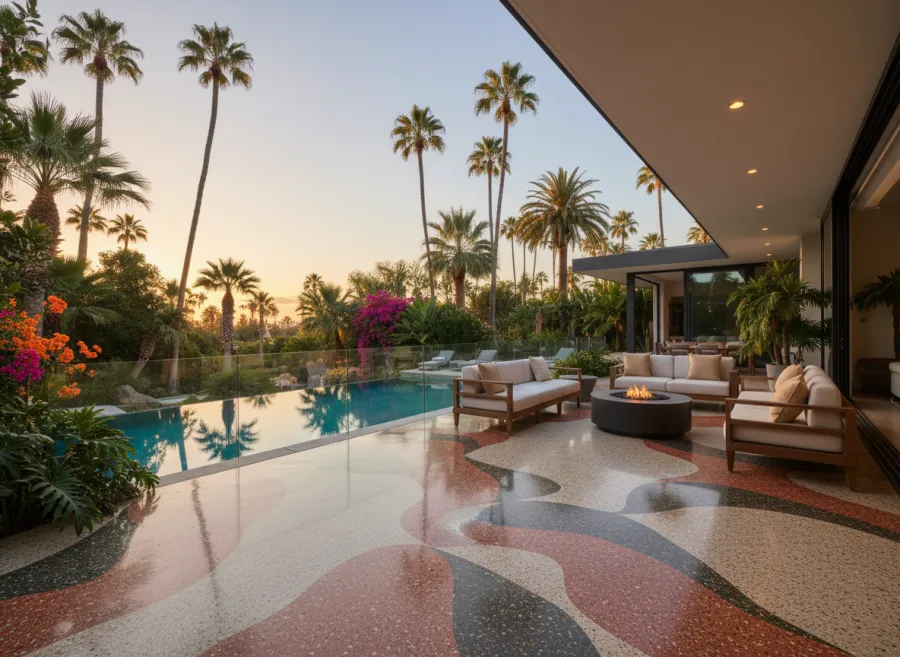
Is epoxy flooring slippery when wet?
A smooth, high-gloss epoxy floor can be slick when wet, the same way any hard smooth surface is. But that is a design choice, not a property of coatings. Slip resistance gets engineered into a floor through texture additives and flake broadcast, tuned to how each surface is used, and no outdoor Florida surface should ever be built without it.
Wet floors are not an edge case here; they are Tuesday. Between summer storms, pool splash, and morning humidity, our patio, lanai, and pool deck coatings live wet for half the year. Here is how grip actually works in a coating system and how to spec it right.
Where does slip resistance come from?
Three places, used alone or together:
| Method | How it works | Where it fits |
|---|---|---|
| Grit additives in the topcoat | Fine aluminum oxide or polymer particles broadcast into the wet final coat | Pool decks, patios, ramps, commercial wet areas |
| Full-broadcast flake texture | The dense flake layer itself creates fine all-over texture | Garages, lanais, walkways, most residential floors |
| Finish sheen selection | Satin and matte topcoats grip better than mirror gloss | Interior floors balancing looks and grip |
The additives are the workhorse outdoors. Broadcast density is genuinely tunable: a light pass gives a garage floor confident footing without roughness, a heavy pass gives a pool surround texture that grips wet bare feet at a run. The right level is chosen per area, and you should feel samples at the quote, because grip is easier to judge underfoot than in a brochure.
Why is flake the quiet grip champion?
A full-broadcast flake floor is textured by construction. Thousands of flakes locked under the clear wear coat create a fine, even micro-texture across the entire surface, which is why flake floors test better wet than smooth coatings even before any grit is added. Add the way the multi-color surface hides sand and dirt between cleanings and you have the explanation for flake’s dominance in Florida garages and covered outdoor spaces.
For barefoot pool zones we still add texture on top of flake’s baseline, because wet feet moving fast deserve engineering, not adequacy.
How should different spaces be specced?
Match the grip to the water and the feet. Pool surrounds and steps get the most aggressive texture, tuned for wet bare skin. Lanais and patios get a middle setting that grips rain and splash while staying comfortable for furniture and bare feet. Garages get a mild broadcast that handles rain dripping off cars without turning the floor into sandpaper for crawling under a project. Interior floors can run smoother, using sheen choice for balance.
The cleaning trade-off is real but small: heavier texture holds a bit more grime and asks for a hose or stiffer brush, which outdoor surfaces get anyway. The mistake worth avoiding is maximum gloss outdoors because it photographed well; that floor gets renamed the slip-n-slide the first July afternoon.
What about floors that are already slick?
Some can be fixed in place. A sound, compatible existing coating can often take a new textured topcoat after proper prep, adding grip without a full rebuild. A failing or incompatible coating cannot be saved that way, and the honest path is rebuilding the system with texture designed in, which is standard scope in our pool deck resurfacing work where old slick surfaces are half the reason we were called.
Either way, the assessment costs nothing. Tell us which surface worries you, wet or dry, and we will tell you what grip level it needs and what that costs. Free quotes, 24/7, at (727) 423-5985 or the quote form.