
Home Contact Call (727) 423-5985
Beach sand, damp slabs, and hard-working garages — Clearwater concrete has its own rules, and our coatings are built for them.
Clearwater garage floors fight a two-front war. From above: beach sand tracked in daily, salt air, wet gear, bikes, coolers, and golf carts. From below: groundwater sitting close under the slab across much of the city, pushing moisture up through bare concrete year-round. Bare slabs here dust constantly, cheap coatings blister from underneath, and the garage ends up as the grittiest room in an otherwise clean house.
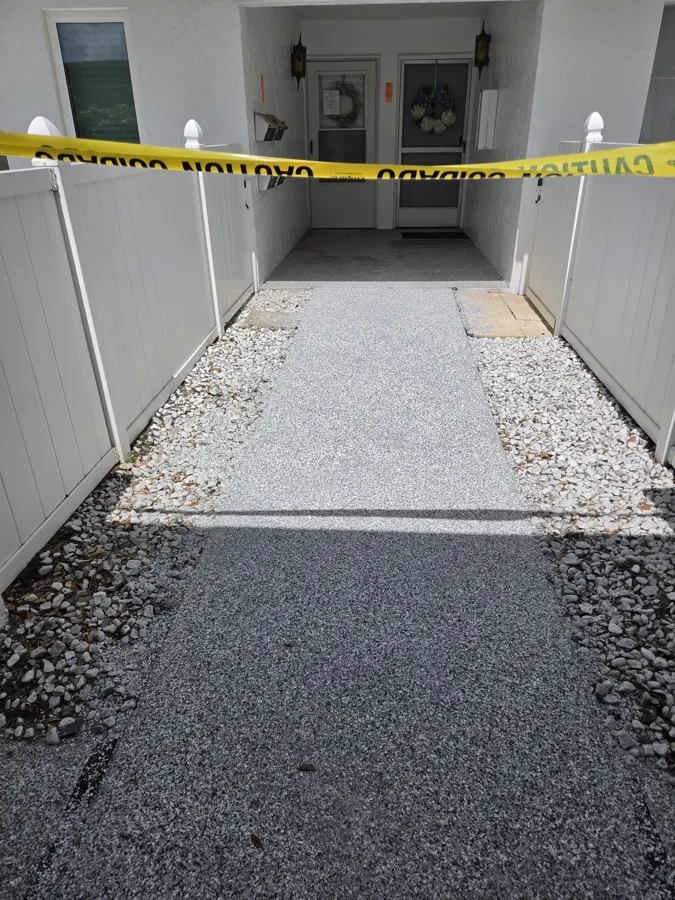
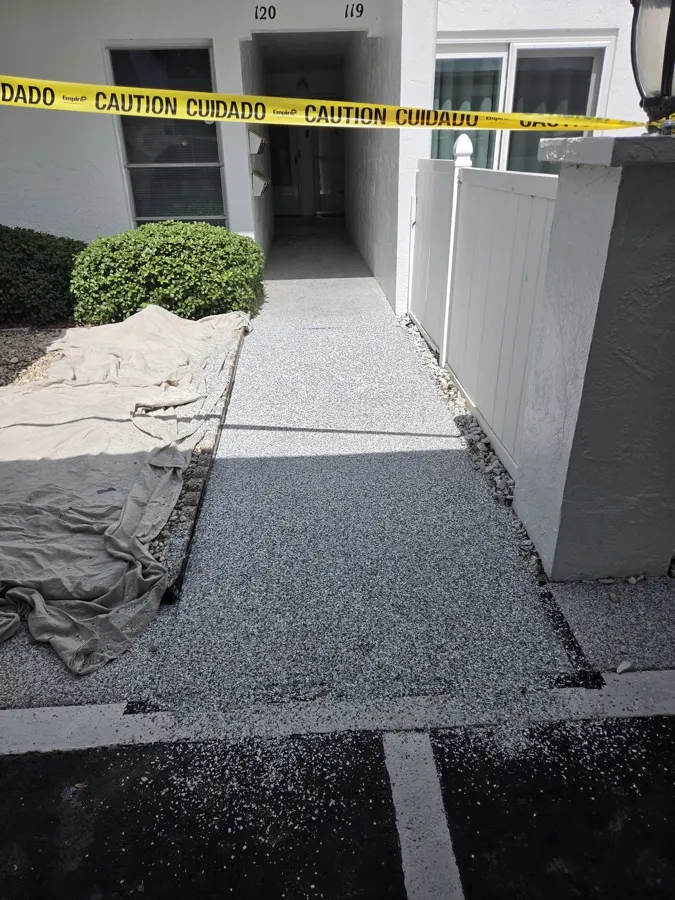
Our garage floor epoxy systems are specced for exactly this fight. Moisture testing comes first on every Clearwater job — not as a formality, but because the readings genuinely decide the primer. Then the slab gets diamond-ground, repaired, and built into a sealed system, usually finished as a full-broadcast flake floor, which happens to be the best sand-hiding, grip-adding finish ever invented for a beach-town garage. And that is not a stretch: the flake work pictured on this page is our own install at a Pinellas County community.
Free, no-obligation quotes — and we answer the phone 24/7.
(727) 423-5985Coatings do not usually fail from the top in coastal Pinellas — they fail from below. When groundwater sits a few feet under a slab, vapor migrates up through the concrete constantly, and a standard coating applied straight over it can blister, cloud, or let go in patches months after install. None of that is visible on day one, which is why it burns so many homeowners who bought a cheap job.
The defense is boring and non-negotiable: measure, then build accordingly. We take moisture readings on every Clearwater slab before quoting the system. Normal readings get the standard build; elevated readings get a moisture-tolerant primer engineered to bond wet-side and block vapor under the decorative system. Same finished look either way — but only one of them lasts on a damp slab.
Sand is the daily reality of Clearwater garages — it comes home in shoes, towels, cart tires, and dog paws, and on bare gray concrete it grinds into the surface and shows everywhere. A full-broadcast flake floor flips that: the multi-color texture visually swallows sand and dirt between sweepings, the sealed surface releases it with a push broom or a rinse, and the added grip keeps wet feet honest. It is the single most practical finish we install in this city.
It also holds up to how Clearwater actually uses garages: golf carts parked and charged, fishing setups rinsed and stored, beach gear stacked, workshops running through summer. When the garage is done, the same moisture-smart approach extends to lanais and pool surrounds — and if you are comparing quotes across the bay, our St. Pete garage page covers the same system on the peninsula.
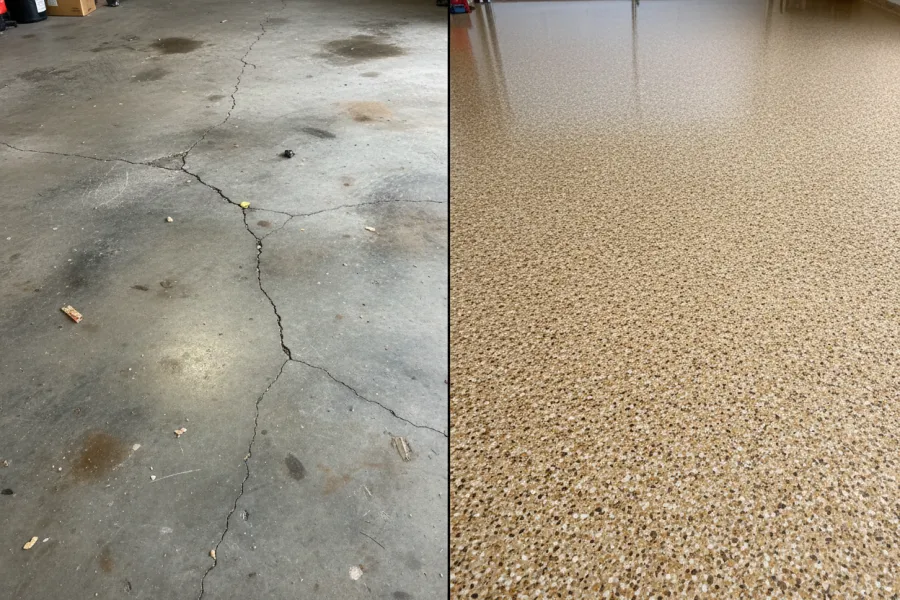
Yes, with repair first. Which cracks can be fixed and coated, which mean bigger problems, and how pros prep a cracked Florida garage slab before epoxy.
Read more →The three reasons epoxy garage floors fail in Florida: hot-tire pickup, slab moisture, and skipped prep. What each failure looks like and what prevents it.
Read more →How long an epoxy floor really lasts in Florida: pro vs. DIY, epoxy vs. polyaspartic, and what UV, slab moisture, and hot tires do to the number here.
Read more →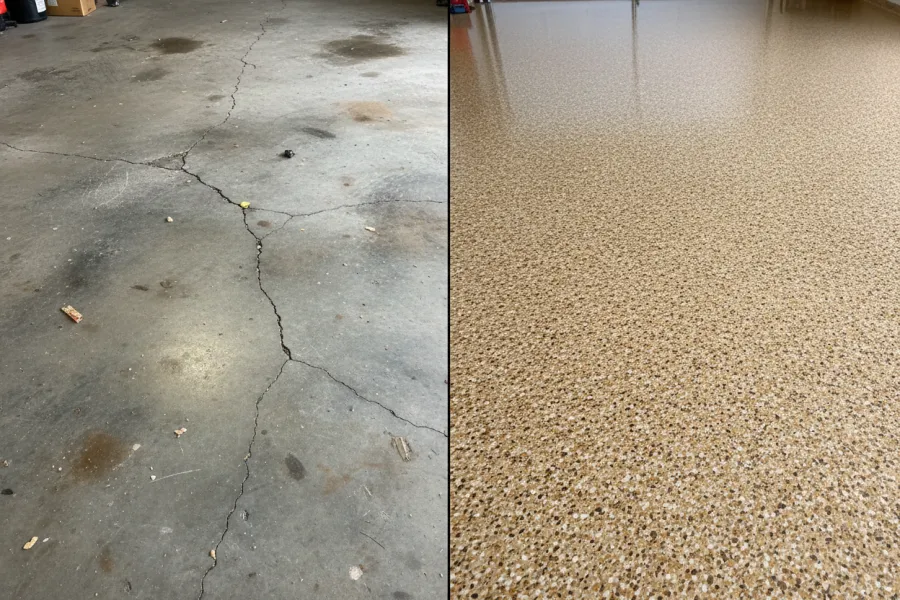
What an epoxy garage floor really costs in Florida: per-square-foot rates, 1, 2, and 3-car garage totals for Tampa Bay, and what moves the price up or down.
Read more →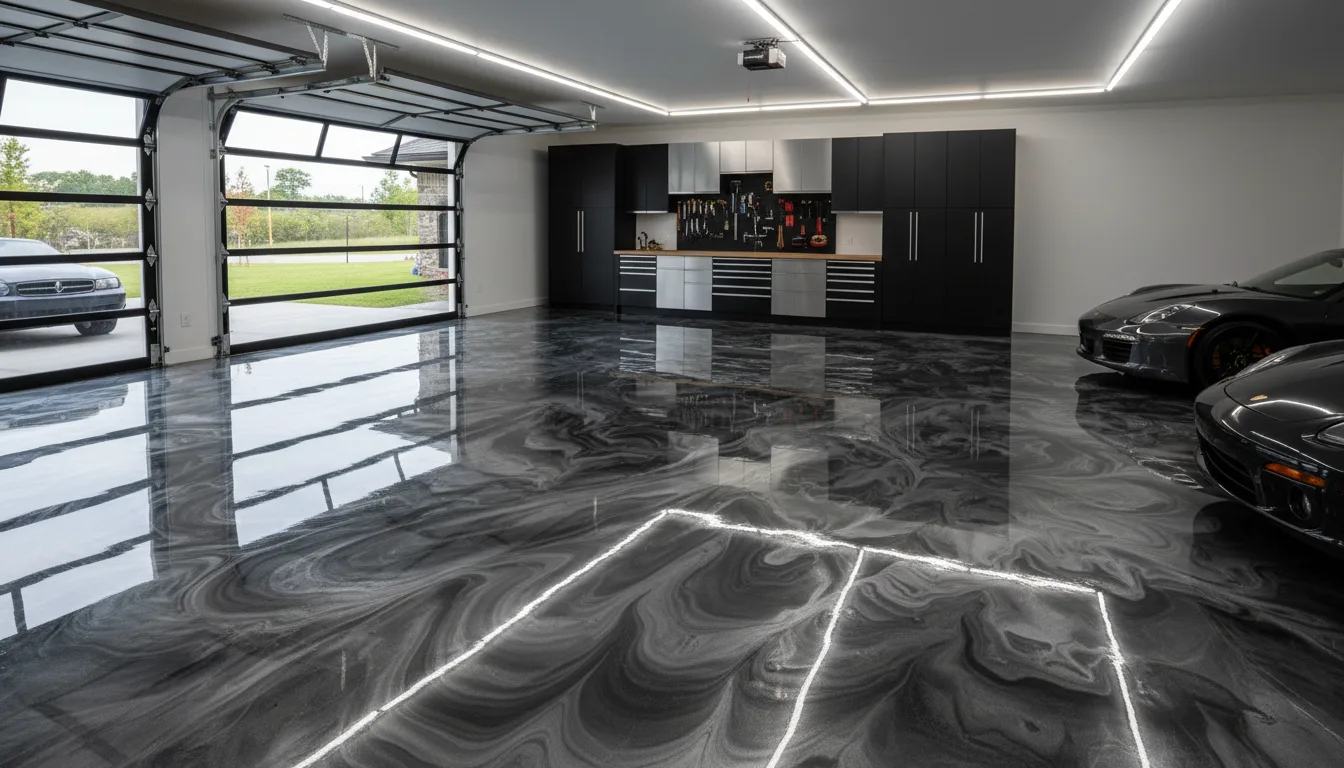
Epoxy vs. polyaspartic for Florida garages, compared honestly: chemistry, UV and hot-tire performance, cure times, cost, and why most pro floors use both.
Read more →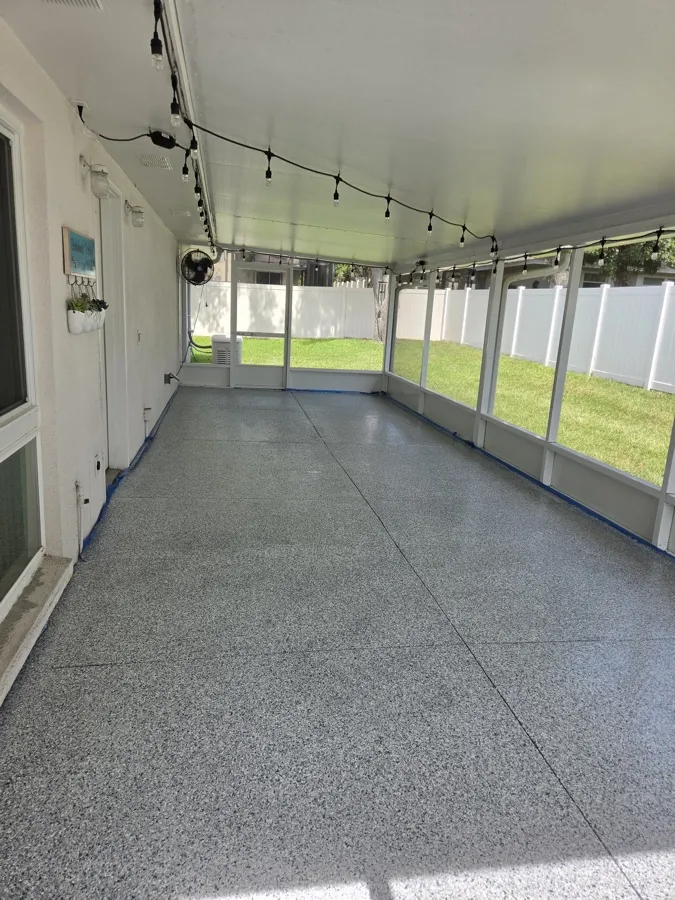
How to pick a flake floor color blend: what hides dirt in Florida, how blends read at room scale vs in-hand, and the choices that age well in garages and lanais.
Read more →The questions we hear most about garage floor epoxy around Clearwater. Don't see yours? Call us — we're open 24/7 and glad to talk it through.
Ready to transform your floors? Fill out the form or reach out directly — we respond to all inquiries within 24 hours.